
If you are sleeping a full eight hours but still wake up feeling like you barely slept, you may be dealing with sleep apnea. This condition affects an estimated 83.7 million adults in the United States.
At Broward ENT Services in Fort Lauderdale, Dr. Wilson DuMornay, MD, FACS, specializes in diagnosing and treating sleep apnea. We will walk you through the diagnostic process step by step, from recognizing the warning signs to understanding your sleep study results.
What Is Sleep Apnea?
Obstructive sleep apnea occurs when the soft tissues in the back of your throat collapse repeatedly during sleep, blocking your airway. Each time this happens, your body briefly wakes itself up to resume breathing. You may not remember these episodes in the morning, but they fragment your sleep and reduce the oxygen reaching your brain and organs.
Because it happens while you are asleep, most people with sleep apnea have no idea they have it. Symptoms like fatigue and poor concentration are easy to blame on stress or aging. Up to 80% of moderate-to-severe cases remain undiagnosed.
An ENT specialist like Dr. DuMornay can identify structural contributors that a general practitioner may miss, including a deviated septum, enlarged tonsils or nasal obstruction. You can learn more about the condition in our Comprehensive Guide to Sleep Apnea and Effective Treatments.
Signs You Need a Sleep Study
- Loud, chronic snoring
- Gasping or choking during sleep
- Daytime exhaustion that does not improve with rest
- Morning headaches
- Difficulty concentrating or mood changes
- High blood pressure that does not respond to medication
How Is Sleep Apnea Diagnosed by an ENT?
Most patients first mention their symptoms to a primary care doctor, who may refer them directly for a sleep study. That approach skips an important step. An ENT can physically examine the structures of your airway to identify what is causing the obstruction. Enlarged tonsils, a deviated septum, nasal polyps and excess tissue in the soft palate are all common contributors that only a trained ENT (ear, nose and throat) specialist can evaluate in person.
What Happens During a Sleep Apnea Evaluation
Understanding how sleep apnea is diagnosed starts with an in-office ENT evaluation, where your doctor examines the structures of your nose, throat and airway to identify potential sources of obstruction. From there, your ENT may recommend sleep apnea testing through an in-lab polysomnography or a home sleep test to confirm the diagnosis and measure its severity.
Dr. DuMornay may also ask you to complete the Epworth Sleepiness Scale, a short questionnaire that measures how likely you are to fall asleep in everyday situations. Combined with the physical exam findings, this helps determine whether your symptoms are consistent with obstructive sleep apnea and how urgently you need further testing.
When Your ENT Will Recommend a Sleep Study
Not every patient who snores needs a sleep study. Based on your exam results and symptom severity, Dr. DuMornay will determine whether formal testing is the right next step. If the clinical picture strongly suggests sleep apnea, he will refer you for a sleep study to confirm the diagnosis and measure how severe it is. In some straightforward cases, a home sleep test may be sufficient.
What to Expect During a Sleep Study
In-Lab Sleep Study vs. Home Sleep Testing
There are two main types of sleep studies. An in-lab polysomnography, or PSG, is an overnight sleep study. You spend one night at a sleep center while sensors monitor your brain waves, eye movements, heart rate, blood oxygen levels, airflow and body position. The data gives your doctor a complete picture of what is happening while you sleep.
A home sleep apnea test uses fewer sensors and lets you sleep in your own bed. It measures airflow, breathing effort and blood oxygen but does not track brain activity. Home testing works well for patients with a high likelihood of moderate-to-severe obstructive sleep apnea and no other significant sleep disorders.
The Night of Your Sleep Study
If you are scheduled for an in-lab study, you will arrive at the sleep center in the evening and change into your own sleepwear. A sleep technologist will attach small sensors to your scalp, face, chest and legs using a mild adhesive. The sensors are painless and small enough that most people can shift positions and sleep comfortably.
You do not need a perfect night of sleep for the study to produce useful results. Even a few hours of data is often enough to identify apnea events and measure their frequency.
How to Read Your Sleep Study Results and AHI Score
The main number your doctor will review with you is the Apnea-Hypopnea Index, or AHI, which measures how many times per hour your breathing was partially or completely blocked during sleep. An AHI below 5 is considered normal, 5 to 14 is mild, 15 to 29 is moderate and 30 or more is severe. At Broward ENT, Dr. DuMornay reviews the full report with you and explains what it means for your health and your treatment options.
How Is Sleep Apnea Treated?
CPAP and Nonsurgical Treatments
CPAP, or continuous positive airway pressure, is the most commonly prescribed treatment for obstructive sleep apnea. This device delivers a steady stream of air through a mask to keep your airway open during sleep.
Other nonsurgical options include oral appliance therapy, which uses a custom-fitted mouthpiece to reposition the lower jaw and tongue, positional therapy, snoreplasty injections, radiofrequency ablation and lifestyle changes like weight management and regular exercise.
Surgical and Laser Treatments for Sleep Apnea at Broward ENT
When a structural issue contributes to airway obstruction, procedures such as septoplasty, uvulectomy, uvulopalatopharyngoplasty and turbinate reduction can correct it. Dr. DuMornay has nearly 20 years of surgical experience with these procedures and can recommend the option that’s best for you.
Broward ENT also offers NightLase, a noninvasive laser treatment that tightens the tissues of the soft palate and airway to reduce snoring and improve mild to moderate sleep apnea without incisions, anesthesia or downtime.
Additional Services at Broward ENT
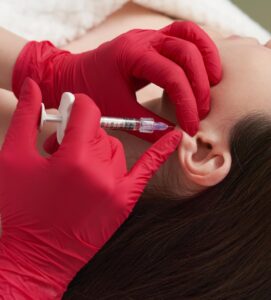
Many patients who first visit Broward ENT for sleep apnea screening or a sinus concern find out that the practice also offers cosmetic services, including torn earlobe repair, a quick in-office procedure performed under local anesthesia with minimal downtime for patients with stretched or split piercings, earlobes damaged by heavy earrings or accidental trauma. Other services include balloon sinuplasty for chronic sinus issues, allergy testing and treatment, and rhinoplasty (nose surgery).
View before and after photos of previous patients in our online gallery.
FAQs About Sleep Apnea
Do I need a sleep study to find out if I have sleep apnea?
In most cases, a sleep study is the standard method for confirming an obstructive sleep apnea diagnosis and measuring its severity. Your ENT may recommend either an in-lab polysomnography or a home sleep test based on your symptoms and initial evaluation.
How long does a sleep study take?
An in-lab sleep study typically takes one night, usually from around 9 p.m. to 6 a.m. The technologist needs several hours of sleep data to accurately measure your breathing patterns, oxygen levels and sleep stages.
Is a sleep study uncomfortable?
Most patients describe it as slightly awkward but not painful. You can shift positions, get up to use the bathroom and sleep in your own clothes. At-home sleep studies allow you to sleep comfortably in the privacy of your own home and in your own bed.
How accurate are sleep studies?
In-lab polysomnography is the gold standard for diagnosing sleep apnea and is highly accurate. Home sleep tests are reliable for detecting moderate-to-severe obstructive sleep apnea but may miss milder cases or other sleep disorders that require more detailed monitoring.
Can sleep apnea be diagnosed without a sleep study?
A sleep study is typically needed to confirm the diagnosis. However, an ENT evaluation can identify structural factors like a deviated septum or enlarged tonsils that strongly suggest obstructive sleep apnea before formal testing is ordered.
Schedule a Sleep Apnea Consultation in Fort Lauderdale
If you recognize the symptoms described in this article, the next step is a professional evaluation and sleep study for sleep apnea. Broward ENT Services has two convenient Fort Lauderdale locations and a team led by a board-certified ENT surgeon with nearly two decades of experience.
Call 954-368-3348 or complete our online contact form to schedule your consultation with Dr. DuMornay.